

The theme of ECOpole’26 is:
🖥️ Semiconductors, Environmental issues, and Cross-border innovation 🌿
The Conference Programme will feature keynotes, talks, posters, panels, and workshops, structured around three thematic pillars, each led by an expert keynote speaker:
Speakers

Prof. Sophia Keil (HSZG – Hochschule Zittau/Görlitz, DE)
Prof. Sophia Keil has been Professor of Business Administration, specialising in Production Management and Logistics, at Zittau/Görlitz University of Applied Sciences since December 2017. She was Dean of the Faculty of Business Administration and Engineering from December 2018 to May 2020, and has been Vice-Rector for Education and International Affairs since March 2020. Born on the Baltic island of Rügen, she studied Business Administration at Stralsund University of Applied Sciences and completed a part-time doctoral programme at TU Dresden from 2005 to 2006. She has worked at the semiconductor manufacturer Infineon Technologies Dresden, at TU Dresden’s Chair of Logistics, at Dresden International University and at Stralsund University of Applied Sciences, gaining broad expertise and leadership experience in optimising business processes, production, supply chains and logistics. In 2011, TU Dresden awarded her a doctorate for a thesis on flow-oriented design of production systems in semiconductor fabs, and in 2015 she declined a professorship at SUNY Polytechnic Institute in Albany, New York. Her research focuses on shaping the digital transformation of business and society, developing innovative teaching and learning formats for people of all generations, and designing efficient production systems and supply chains. She is active in two European high-tech research projects, “Power to Power” and “Integrated Development 4.0”, where she works on the workplace of the future in the context of Industry 4.0. She also leads the BMBF-funded project “Europe Open Academy” (EurOpA), which aims to establish a continuing-education academy in Upper Lusatia. She serves on the programme committees of the ASMC and apcm conferences and has published more than 30 works.

Prof. Richard N. Zare (Stanford University, California, USA)
Prof. Richard N. Zare is the Marguerite Blake Wilbur Professor in Natural Science at Stanford University with an appointment in the Department of Chemistry and a courtesy appointment in the Department of Physics. He is a graduate of Harvard University, where he received his B.A. degree in chemistry and physics in 1961 and his Ph.D. in chemical physics in 1964. In 1965 he became an assistant professor at the Massachusetts Institute of Technology, but moved to JILA, University of Colorado at Boulder in 1966, remaining there until 1969 while holding joint appointments in the Department of Chemistry, and the Department of Physics and Astrophysics. In 1969 he was appointed to a full professorship in the Department of Chemistry at Columbia University, becoming the Higgins Professor of Natural Science in 1975. In 1977 he moved to Stanford University. He served for six years as the chair of the Stanford Chemistry Department (2005-2011). Professor Zare is renowned for his research in lasers applied to chemical reactions and to chemical analysis. He is the recipient of many awards including the National Medal of Science in 1983, the Welch Award in Chemistry in 1999, the Wolf Prize in 2005, the Priestley Medal of the American Chemical Society and the BBVA Foundation Frontiers of Knowledge Award in the Basic Sciences both in 2010, the King Faisal Prize (2011), the Othmer Gold Medal in 2017, and the Benjamin Franklin Medal in Chemistry in 2023. He has authored and co-authored over 1100 publications and nearly 100 patents.
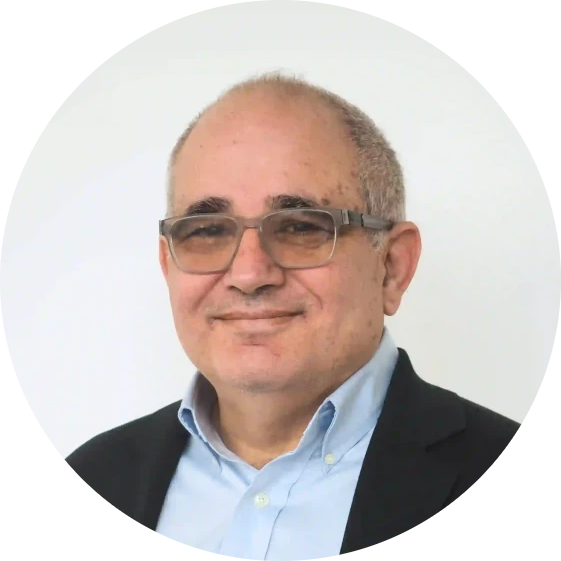
Prof. Piotr Perlin (Institute of High Pressure Physics “Unipress”, Polish Academy of Sciences, Warsaw, PL)
Prof. Piotr Perlin graduated in physics from the University of Warsaw in 1984 and has worked at the Center for High Pressure Research of the Polish Academy of Sciences since 1985. His early research on phonons and structural phase transitions in gallium nitride involved close cooperation with CNRS groups in Paris and Montpellier. In 1993 he earned his PhD from the Institute of Physics, Polish Academy of Sciences, with a dissertation on the physical properties of GaN and AlN under high hydrostatic pressure. From 1995 to 1997 he studied GaN-based optoelectronic devices as a senior research engineer at the University of New Mexico, followed by a year at the University of California, Berkeley, researching internal electric fields in nitride quantum structures. Returning to Warsaw in 1999, he focused on developing blue laser diodes based on gallium nitride. He completed his habilitation in 2002, became associate professor in 2003 and was awarded the title of full professor of physics in 2010. Since 2001 he has also served as CTO of TopGaN Ltd, a company specialising in nitride laser diodes. He has published more than 350 papers and has an h-index of 50 (Google Scholar). His current interests are nitride laser diodes and arrays, superluminescent diodes, and carrier recombination in nitride quantum structures.

Prof. Gerd Fischer (HSZG – Hochschule Zittau/Görlitz, DE)
Prof. Gerd Fischer has been Professor of Inorganic Chemistry and Inorganic Analysis at Zittau/Görlitz University of Applied Sciences since September 2017. He teaches in the Faculty of Natural and Environmental Sciences in Zittau. He studied chemistry and earned his doctorate at TU Dresden, then worked as a postdoctoral researcher on zeolite structures at the CNRS in Montpellier, France. From 2005 he worked at Infineon Technologies and Qimonda, designing and evaluating experiments for new generations of memory chips. In 2008 he joined SolarWorld as Senior Lead Engineer and led the optimisation of silicon solar cells. This work produced world-record efficiencies for industrial PERC cells, as well as numerous publications and patents. His teaching covers general and inorganic chemistry, the fundamentals of analytical chemistry, semiconductor and materials chemistry, and process analysis and control. His research focuses on defects in semiconductor materials, particle analysis, and process control and chemical process analytics.

Prof. Alexander Fish (Faculty of Engineering, Bar-Ilan University, Ramat Gan, IL)
Prof. Alexander Fish is the Vice Dean for Innovation and Industry Relations and co-director of the EnICS Impact Center at the Faculty of Engineering, Bar-Ilan University. His research interests include power-reduction methodologies for high-speed digital and mixed-signal VLSI chips, energy-efficient memory arrays, advanced packaging, biomedical circuits and systems, and cryogenic CMOS circuits. In 2021 he co-founded RAAAM Technology, a startup developing area-efficient, low-power embedded memories. He has authored over 200 scientific papers in journals and conferences, filed more than 30 patent applications and published three book chapters and two books as an editor. He serves on numerous IEEE conference committees and as an editor of several journals.
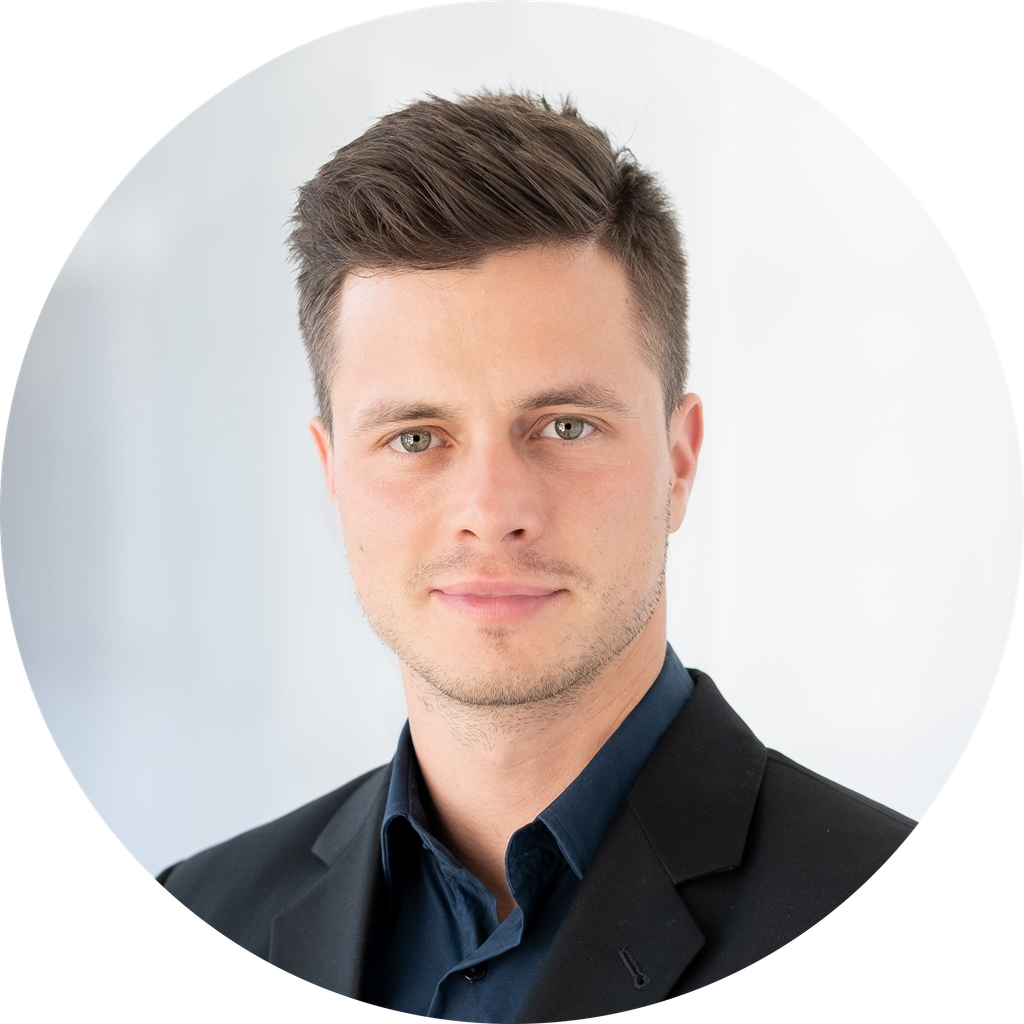
Marco Kircher, M.Sc. (Fraunhofer Institute for Photonic Microsystems, DE)
Marco Kircher, M.Sc. is Sustainability Manager for Cleanroom Efficiency & Resource Management at Fraunhofer IPMS. With more than ten years of experience in MEMS and semiconductor technology, he focuses on translating sustainability challenges into practical solutions for semiconductor manufacturing. His work covers resource and energy efficiency, water management, PFAS and process emissions, as well as the evaluation of new technologies for more sustainable cleanroom operation.
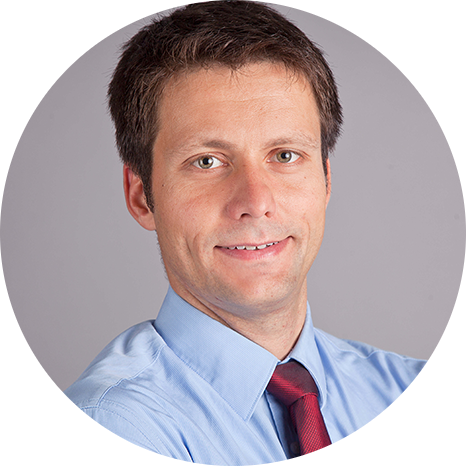
Dr. Hans Kleemann (Technische Universität Dresden, DE)
Dr. Hans Kleemann leads the “Organic Devices and Systems” group at the Institute of Applied Physics and the Dresden Integrated Center for Applied Physics and Photonic Materials (DC-IAPP) at TU Dresden. He explores how electronic systems can be designed sustainably, with work ranging from fundamental questions in physics and materials science to process engineering, system integration and neuromorphic computing. In 2025 he received the Joachim Herz Prize, one of Germany’s most highly endowed science awards at €500,000, for his research on bio-based, recyclable circuit boards. Printed circuit boards make up about 60 percent of the roughly 62 million tons of electronic waste produced worldwide each year, and they are made from non-renewable materials that are hard to recycle. In his project “UnbeLEAFable”, Kleemann uses the vascular skeletons of natural leaves as a framework, filling them with bio-based plastics to create a new material for circuit boards. These boards would need less energy and no fossil resources to manufacture, and they would be biodegradable, so the remaining components could be reused. The prize enables him to develop a prototype for industrial application. Preliminary work on the project also earned an EXIST start-up grant from the German Federal Ministry for Economic Affairs in April 2025.

Prof. Tzong-Ru Lee (National Chung Hsing University, TW)
Prof. Tzong-Ru (Jiun-Shen) Lee is a professor in the Marketing Department at National Chung Hsing University, Taiwan. He earned his PhD at Texas A&M University in the United States (1991–1994), after completing his Bachelor’s and Master’s degrees in engineering and management at National Chiao Tung University, Taiwan. His research covers supply chain management, decision-making, agricultural innovation, internet marketing, e-commerce, logistics, and technology and innovation. In 2006 he was a Fulbright Visiting Professor in the United States, and in 2024 a Visiting Research Professor at the University of Alberta, Canada. He is International Committee General Convener of CIBED and an international adviser for small businesses at the EBRD, has chaired several IAIC conferences, and has lectured at Asia-Pacific Economic Cooperation (APEC) conferences. He previously chaired the International Association for Agriculture Sustainability, is a Chartered Fellow of the Chartered Institute of Logistics and Transport, U.K., and serves as Editor-in-Chief of the International Journal of Applied Industrial Technologies and Governance (IJAITG).

Prof. Martin Pumera (CEITEC – Brno University of Technology, CZ)
Prof. Martin Pumera is Chief Investigator of the Future Energy and Innovation Lab at CEITEC, Brno University of Technology, and a tenured faculty member at the University of Chemistry and Technology, Prague. He received his PhD from Charles University in the Czech Republic in 2001. After postdoctoral stays in the United States and Spain, he became a tenured group leader at the National Institute for Materials Science in Japan in 2006. In 2010 he joined Nanyang Technological University in Singapore, where he spent almost a decade as a tenured associate professor. His research spans nanomaterials and microsystems, with a focus on the electrochemistry and synthetic chemistry of 2D nanomaterials, nanotoxicity, micro- and nanomachines, and 3D printing. Clarivate Analytics named him a Highly Cited Researcher in 2017 and 2018, making him the only chemist in the Czech Republic to receive this distinction. He has published more than 600 papers, which have received over 30,000 citations, and has an h-index of 106. He has supervised 30 PhD students, 8 Master’s students and more than 50 Bachelor’s students. As principal investigator, he has secured a total of €17.1 million in research funding, of which €13 million is currently active.

Dr. Sebastian Schellhammer (Technische Universität Dresden, DE)
Dr. Sebastian Schellhammer, research assistant at the Institute of Applied Physics at TU Dresden, has been accepted into the Academy for Excellent University Teaching after a competitive selection process. Alongside developing innovative teaching approaches in STEM degree programmes, he is engaged in research on academic teaching and fosters exchange between educators through TU Dresden’s Stammtisch Lehre@MINT (Teaching@STEM round table). His teaching embraces student diversity and follows a student-centred design that actively involves students in shaping courses. This approach is especially visible in his course “Applications in Physics” for physics teacher students, which earned him both the Teaching Prize of the Association of Friends and Sponsors of TU Dresden and the Ars Legendi Faculty Prize for Physics in 2025. He is currently focused on further developing physics lab courses. His membership brings TU Dresden recognition for excellent teaching as well as direct access to proven teaching innovations, collegial advice and inter-university cooperation, with insights feeding back into courses, programme development and quality improvement in teaching. “Our members share what works – and develop it further together,” says Prof. Dr. Hannes Saas, Chairman of the Academy, adding that Schellhammer will act as a multiplier, bringing innovative approaches to TU Dresden.

Dr. Zbigniew A. Szydło (Highgate School, London, UK)
Dr. Zbigniew A. Szydło is a chemistry teacher and has been based at Highgate School in North London since January 1975. During the past four decades he has given over 900 chemistry lectures to a wide variety of audiences, mainly in schools in London. He has also authored several scholarly articles in the fields of Chemistry, History of Chemistry, and Chemistry Education. He has regularly given public lecture-demonstrations at the Royal Institution of Great Britain in London, and these lectures have received worldwide acclaim. He has written two books, and was a co-author, together with Professors Witold and Maria Wacławek, of the recently published book: 111 European Chemists.
Prof. Mincong Tang (ICIR, Beijing Jiaotong University, CN)
Dr. Mincong Tang is a Chair Professor at the Industrial University of Ho Chi Minh City, Vietnam, and holds a Ph.D. in Management Information Systems from The Chinese University of Hong Kong. His research interests include information systems, supply chain management, green logistics, low carbon economy, artificial intelligence, machine learning, and simulation modelling. He has published extensively in leading international journals, including IEEE Transactions on Fuzzy Systems, Information & Management, and Applied Soft Computing. He also serves on the editorial teams of several SCI- and SSCI-indexed journals, contributing to international academic research and collaboration.
🏅 Young Researchers Forum
We encourage young researchers (up to 30 years of age), early-career scientists, and students to present a poster in our special poster session on Friday, 11 December. Awards will be presented for outstanding contributions.
Abstracts and the full programme will be available electronically and on the Conference website.
For details from previous editions, please visit our ECOpole Conference Series page.
We look forward to your participation and fruitful discussions that drive forward sustainable solutions!
